A total price tells you almost nothing on its own. What matters is what the price includes. Use this guide with each estimate in front of you and mark which items are clearly included, which are allowances, which are excluded, and which are missing.
1. Roof areas and measurements
The estimate should say which roofs are covered: main roof, porch, garage, addition, bay windows. It may show area in 'squares' (100 square feet each). If one estimate includes the porch roof and another doesn't, they aren't comparable. Want an independent size check? The free roof-size tool on the Roofing Roughnecks site measures roof area from satellite and elevation data.
2. Tear-off
How many layers of existing roofing come off? Two layers cost more to remove and dispose of than one. An estimate that doesn't say is leaving room for a surprise.
3. Decking
Nobody can see the deck until tear-off, so most estimates include an allowance: a number of boards or sheets, with a price for each one beyond that. Look for the allowance, the unit price, and how you'll be told and asked to approve additional decking. In Fairfax County, the permit guidance lists replacement of less than 256 square feet (nine boards) of roof plywood as not needing a permit, unless the roof must be fire rated, as on townhomes. A larger decking replacement changes that, which is another reason this line should be explicit.
4. Underlayment and ice and water barrier
Underlayment covers the deck under the shingles. Look for the type (synthetic is common) and where ice and water barrier membrane goes: eaves, valleys, around chimneys and skylights, at roof-to-wall transitions. Vague wording like 'underlayment as needed' is worth asking about.
5. Drip edge
Metal edge along the eaves and rakes that directs water into the gutter and protects the deck edge. It should be listed.
6. Flashing
The estimate should name the flashing locations: chimney, walls, dormers, skylights, valleys. Ask whether existing flashing is being replaced or reused, and how that's decided. Flashing is where many leaks start, so 'reuse existing' deserves a conversation.
7. Shingles
Manufacturer, product line and color should all be named. 'Architectural shingles' alone isn't enough. Roofing Roughnecks installs GAF Timberline HDZ, Timberline UHDZ and Grand Sequoia, and CertainTeed Landmark, Landmark Pro and Presidential Shake, so an estimate from us names one of those.
8. Ridge, starter and accessories
Ridge cap shingles, starter strips along the edges, pipe boots and other accessories. They're small items, but if one estimate includes new pipe boots and another reuses old ones, that's a real difference.
9. Ventilation
What intake and exhaust changes are included? A ridge vent with no plan for intake isn't a ventilation plan. Ask for existing conditions and proposed changes in writing.
10. Protection, disposal and cleanup
How landscaping, siding, windows, decks and driveways will be protected; where debris goes; daily cleanup and nail sweeping; and a final walk-through.
11. Permits and approvals
Whether a permit applies and who is responsible for it. For HOA approval, the estimate should note that it's the homeowner's application and the contractor provides product details.
12. Exclusions and changes
Read the exclusions as carefully as the inclusions. Common ones: gutters, solar panel removal, skylight replacement, interior repairs, siding or trim repair. Then find how changes are handled: a written change order you approve before extra work starts.
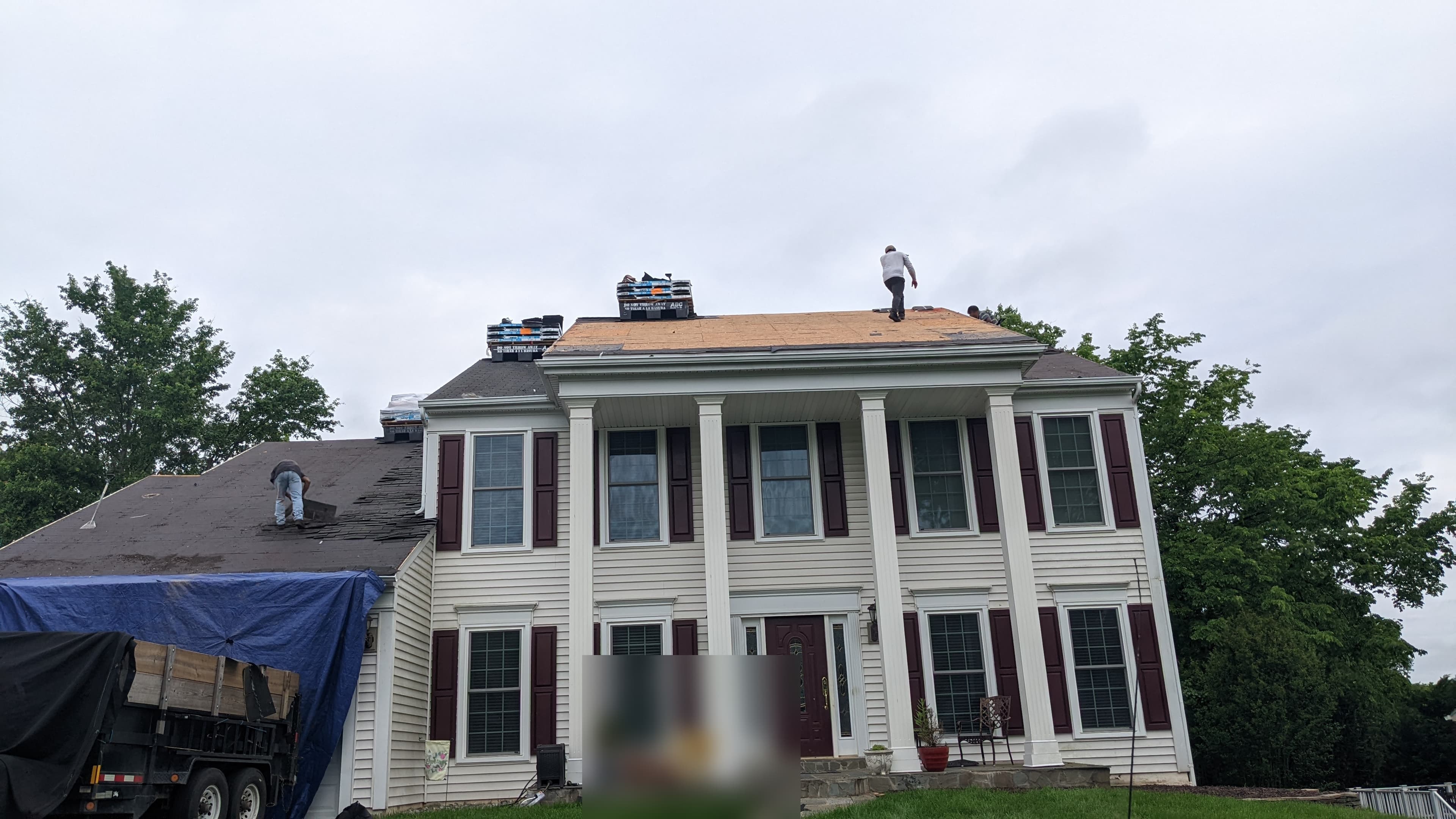
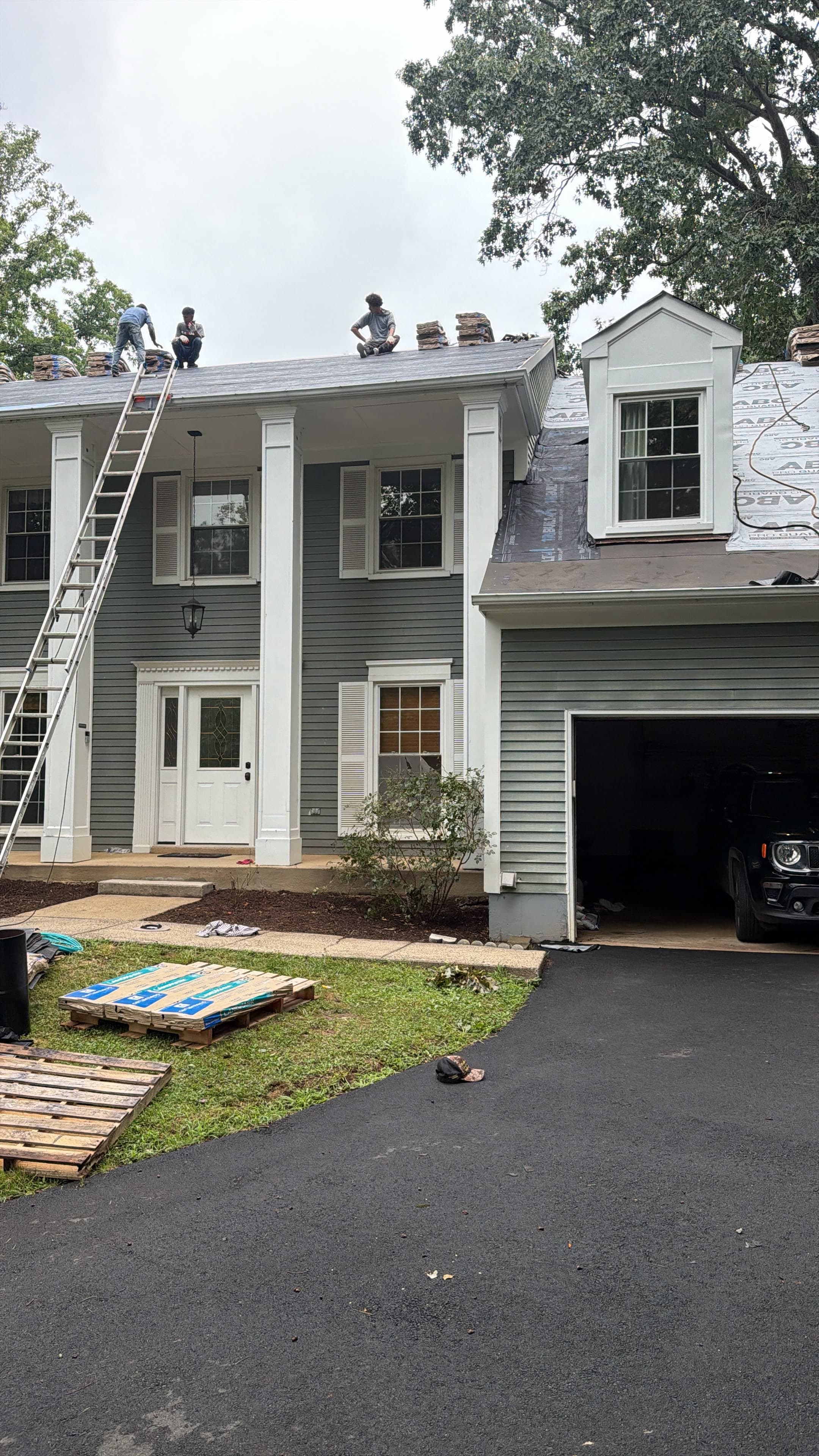
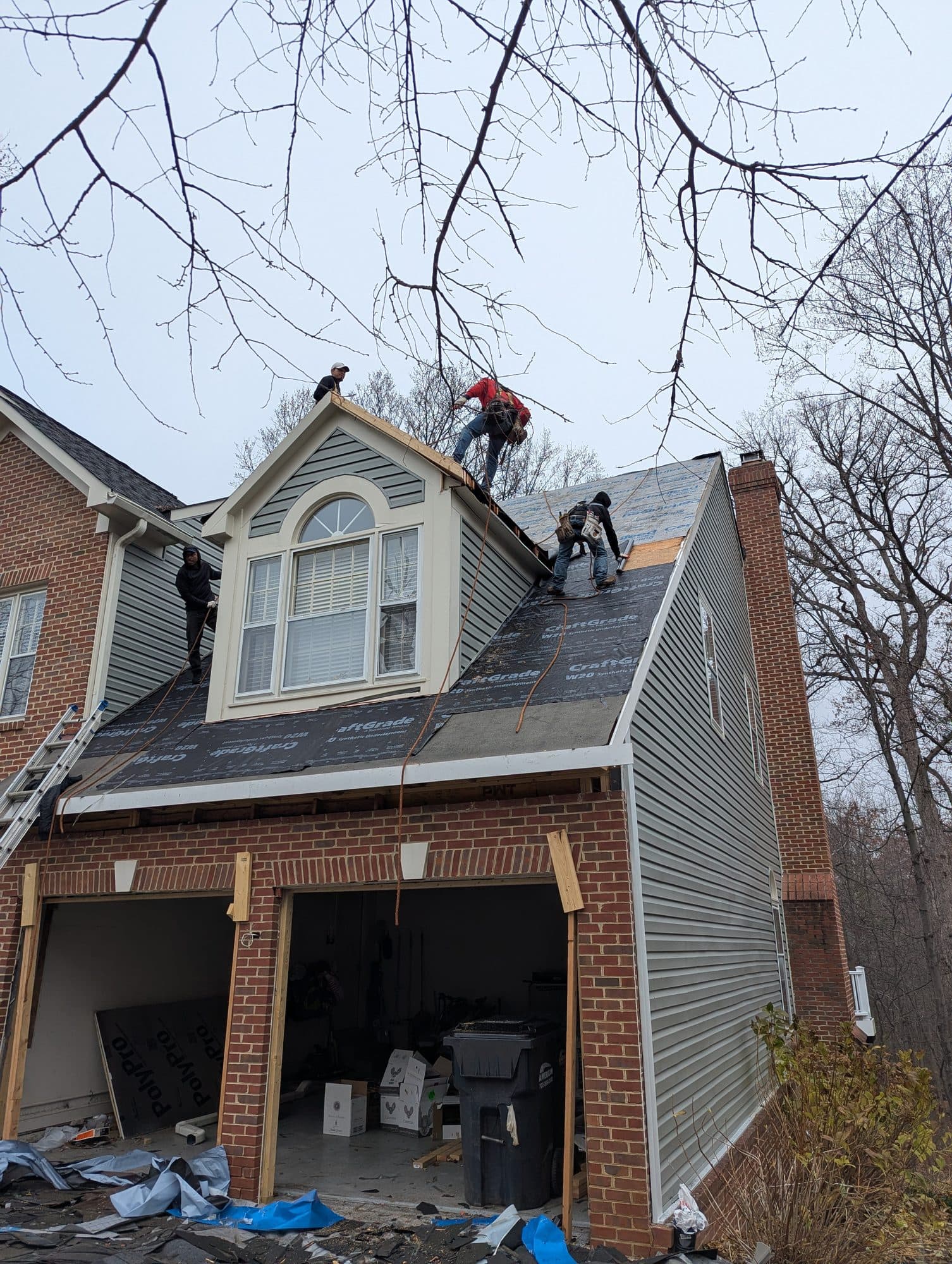
Decking in Sterling, underlayment with staged bundles in Centreville, and dormer and chimney flashing in Reston: three line items you can actually see.
Red flags worth a second look
- A single total with no line items.
- No mention of tear-off layers or decking.
- 'Same as existing' in place of a named shingle line and color.
- No license number. In Virginia, you can look up a contractor's license on the DPOR website.
- Pressure to sign the same day, especially after a storm.
Putting it together
Line up your estimates in a simple table with these twelve rows. Gaps and differences jump out. Then ask each contractor to explain them. The best estimate isn't always the cheapest or the most expensive; it's the one where you understand exactly what you're buying. Compare totals against the Roofing Roughnecks cost guide ranges for a sanity check.
What is a roofing square?▸
100 square feet of roof surface. Estimates often quote material and labor per square.
Why does my estimate have a decking allowance?▸
Because the deck can't be fully seen until the old roof is off. The allowance and unit price let you know the cost of surprises in advance.
Should an estimate include the shingle color?▸
Yes, or at least the product line, with color confirmed in writing before ordering.
What if two estimates are far apart?▸
Compare them line by line. Differences in tear-off layers, decking, flashing, ventilation or included roof areas usually explain it.