
An ice dam is a ridge of ice along the eaves that stops melting snow from draining off the roof. Water backs up behind it, works its way under shingles, and shows up as stains on ceilings and exterior walls near the eaves. It's a winter leak that doesn't need a single damaged shingle to happen.
How ice dams form
- Snow covers the roof.
- Heat escaping from the house warms the upper roof deck, and snow there melts from underneath.
- Meltwater runs down to the eaves, which overhang the outside wall and stay cold.
- The water refreezes at the cold edge, building a ridge of ice.
- More meltwater pools behind the ridge and backs up under the shingles.
The root cause is uneven roof temperature: a warm upper roof and a cold edge. That's why ice dams are as much an attic problem as a roofing problem. Winters around here can swing above and below freezing, which gives snow the chance to melt and refreeze repeatedly.
Warning signs
- Thick icicles hanging along the gutters, especially in one area of the house.
- A ridge of ice at the roof edge with snow above it.
- Stains or drips on ceilings or walls near exterior walls during or after a thaw.
- Areas of roof where snow melts much faster than on neighboring roofs.
If you have an ice dam right now
- Don't climb onto an icy roof. Falls are the real danger here.
- Don't chip ice with a hammer, shovel or ice pick; you'll damage shingles and gutters.
- Catch interior drips, move belongings and photograph the damage.
- Clear snow from the lower roof with a roof rake from the ground if you can do it safely, without scraping down to the shingles.
- Call a roofer to assess the roof once conditions allow.
What reduces ice dams long term
The goal is a cold roof deck with a protected edge. Three things work together:
- Keep house heat out of the attic: air-seal leaks from the living space and make sure insulation is adequate. This is often the biggest factor, and it's attic work rather than roofing.
- Vent the attic: soffit intake and ridge exhaust carry away heat that does get in, keeping the deck closer to outside temperature.
- Protect the edge: an ice and water barrier membrane at the eaves and in valleys, installed under the shingles, adds a second line of defense where backed-up water is most likely.
Questions to ask before a roof replacement
- Where will ice and water barrier be installed, and how far up from the eaves?
- Are valleys and roof-to-wall transitions getting membrane as well?
- What intake and exhaust ventilation exists today, and what will change?
- Are there signs of past ice dam damage on the decking that tear-off might reveal?
Ask for the answers in the written scope. A roof replacement can't fix an under-insulated attic by itself, but it can make sure the roof side of the equation is done right.
Gutters and ice dams
Clogged gutters don't cause ice dams on their own, but they make them worse: a gutter packed with frozen leaves gives ice a head start right at the cold edge. Cleaning gutters in late fall, after the leaves are down, is one of the simplest things a Chantilly homeowner can do before winter. Gutter guards like Leaf Relief, which Roofing Roughnecks installs, can reduce how much debris collects, though they won't stop ice from forming when the underlying attic conditions are causing it.
After the thaw: what to check
- Ceilings and the tops of exterior walls near eaves, for stains that appeared during the thaw.
- The attic, along the eaves, for damp insulation or wet decking.
- Gutters and downspouts, for sagging or pulled fasteners from ice weight.
- Shingles at the roof edge, for lifted or cracked tabs where ice built up.
Damage from an ice dam doesn't always show right away. If you had one, it's worth an inspection in spring, before the next round of heavy rain finds the same weak spot.
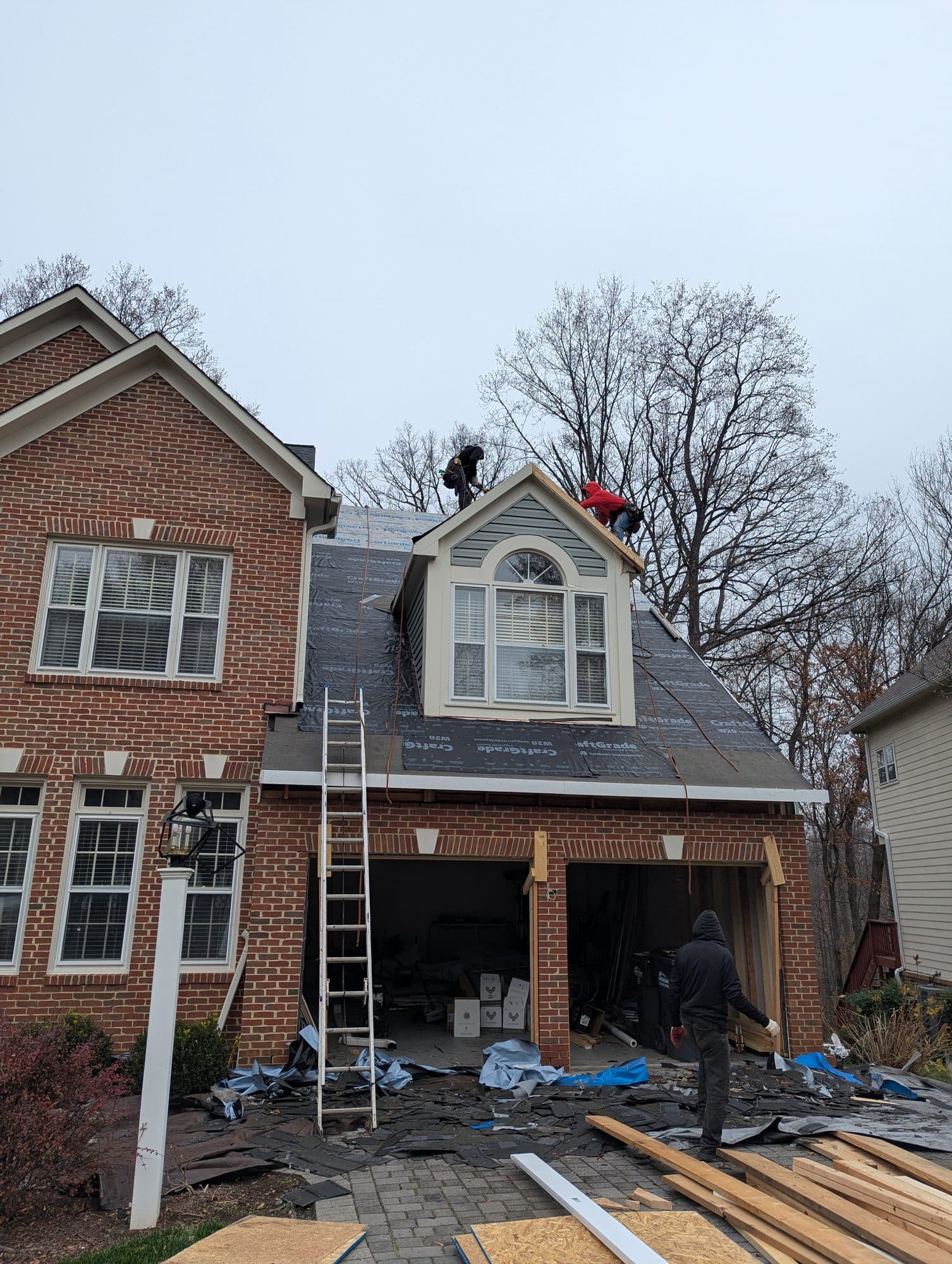
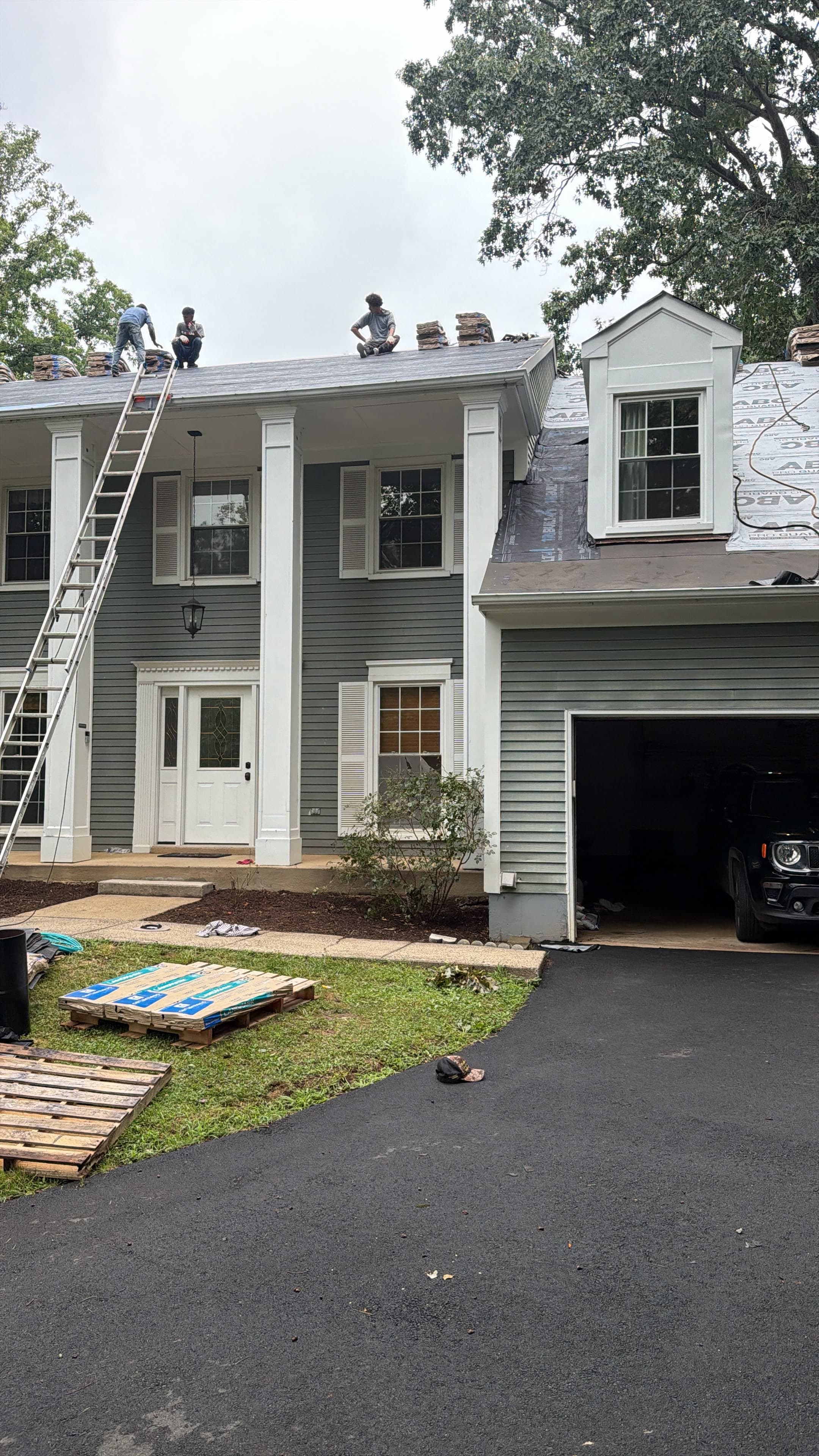
Underlayment going down during re-roofing projects in Reston and Centreville. The membrane at the eaves goes on at this stage, before any shingles.
Does an ice dam mean my roof is bad?▸
Not necessarily. Ice dams can form on sound roofs when attic heat melts snow unevenly. Check for leaks and decking damage afterward, though.
Are heat cables a good fix?▸
They can help keep specific areas clear, but they treat the symptom. Air sealing, insulation and ventilation address the cause.
Is ice dam damage a storm claim?▸
That depends on your policy and your insurer. We can document roof damage; your insurer decides coverage.
Can you fix leaks caused by ice dams?▸
Yes. Leak diagnosis, damaged shingle replacement and ventilation correction are all part of our roof repair service.