On a sunny Northern Virginia summer afternoon, a dark shingle roof absorbs a lot of heat, and that heat moves into the attic. In winter, the problem flips: warm, moist air from the living space leaks into a cold attic and condenses on the underside of the roof. Ventilation addresses both by moving outside air through the attic so heat and moisture don't sit against the roof deck.
Intake low, exhaust high
A working system has two halves. Intake vents, usually in the soffits under the eaves, let cooler air in at the bottom of the roof. Exhaust vents, such as a ridge vent along the peak, let warm air out at the top. Air flows from one to the other through the space between the insulation and the roof deck. Remove either half and the flow mostly stops.
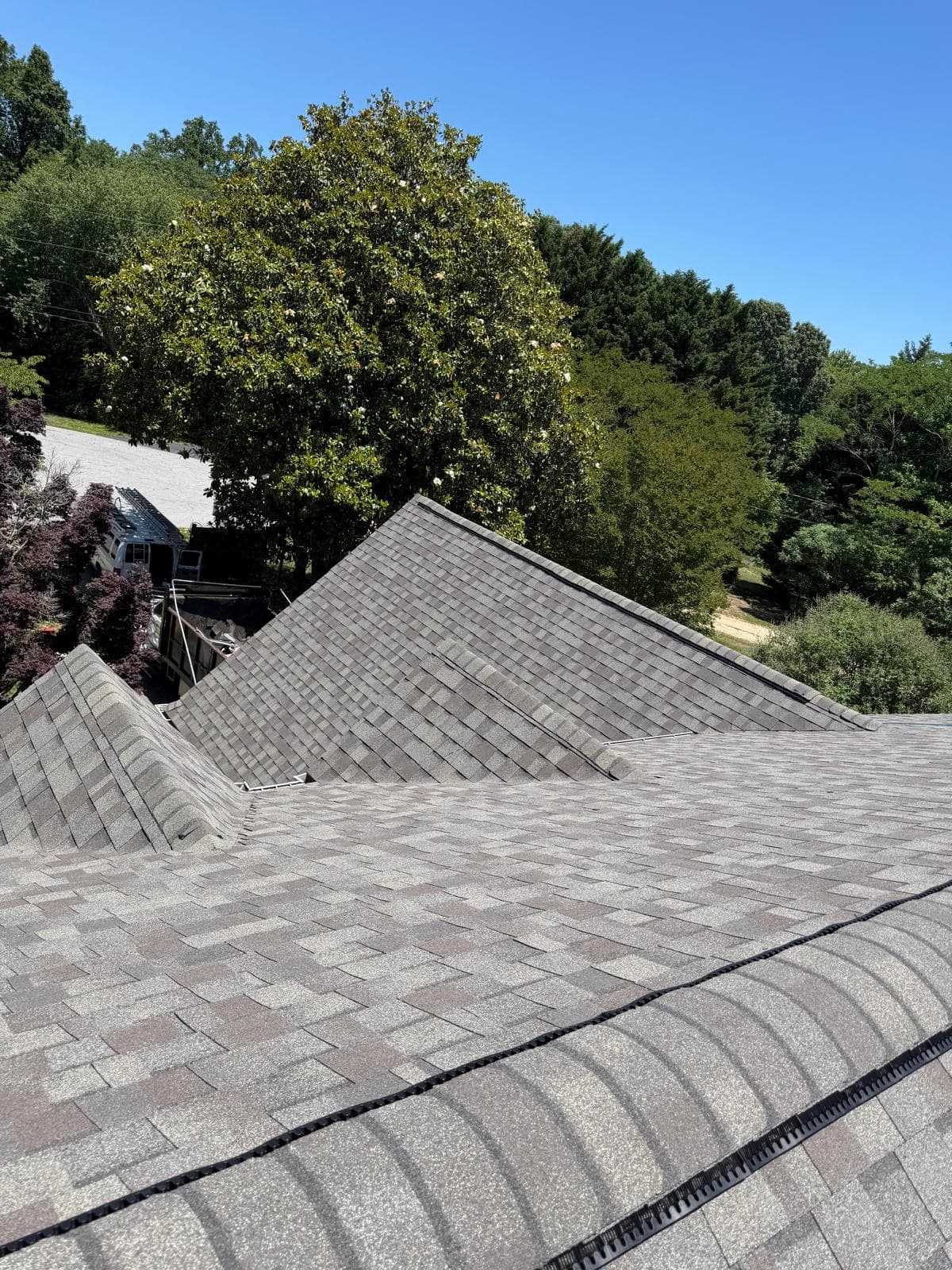
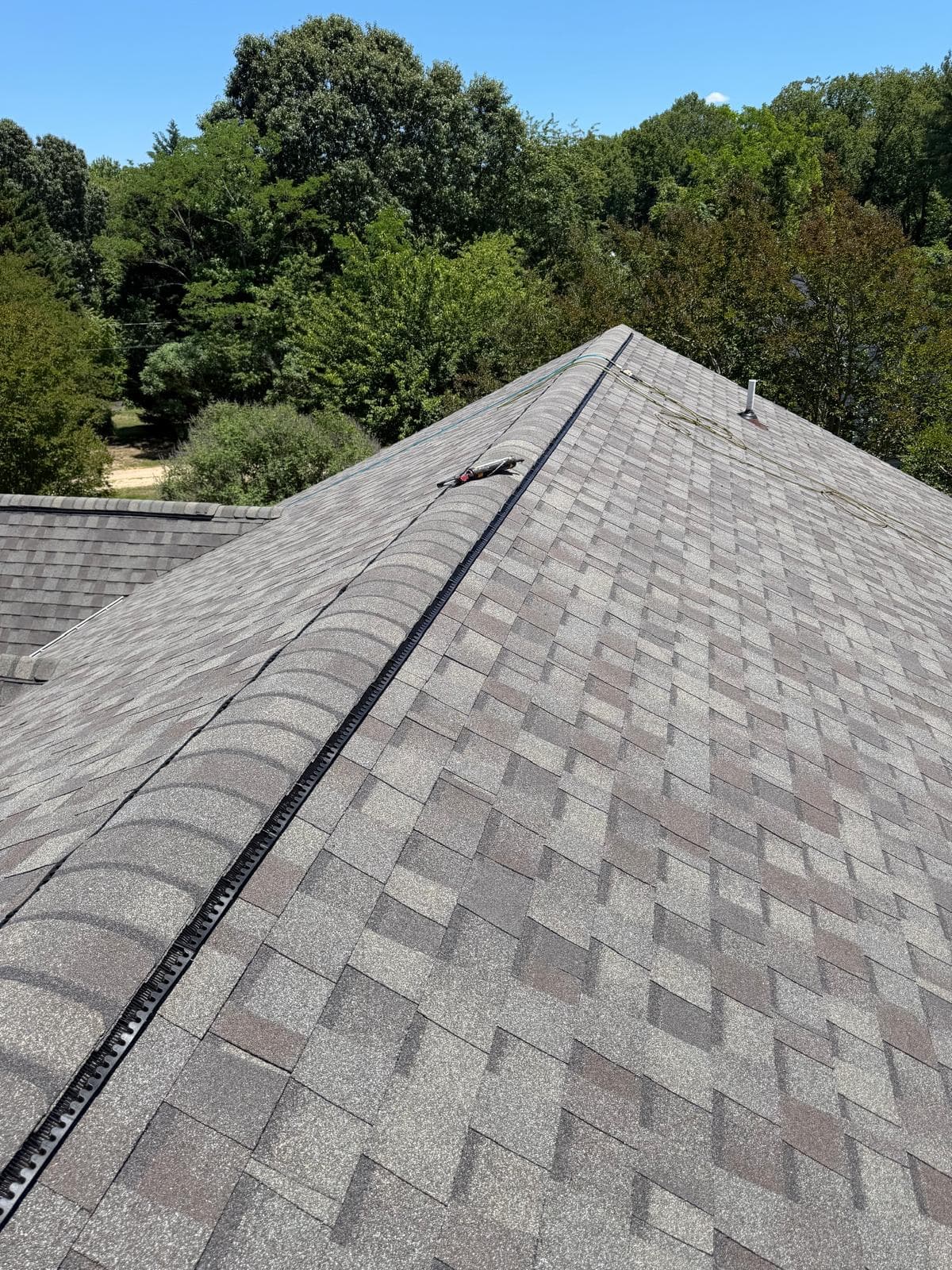
New ridge venting installed as part of a full roof replacement in Ashburn.
Signs ventilation isn't working
- An attic that feels much hotter than outside on a summer afternoon.
- Upstairs rooms that stay hot even with the air conditioning running.
- Frost, condensation or dark staining on the underside of the roof deck in winter.
- Damp or compressed insulation.
- Rusty nail tips poking through the deck.
- Ice dams along the eaves after snow.
- Shingles that look more worn on one slope than another.
Common problems we find
- Soffit vents painted over, covered with solid soffit material, or blocked by insulation pushed into the eaves.
- A ridge vent on a roof with no working intake, so it has nothing to pull from.
- Mixed exhaust types, such as a ridge vent alongside gable vents or powered fans, that short-circuit each other.
- Bathroom fans vented into the attic instead of outside.
- Too little exhaust for the attic's size.
Why a roof replacement is the time to fix it
With the old roof off, the ridge is open, the eaves are accessible and the deck can be cut for new vents without patching a finished roof. That's why Roofing Roughnecks includes a ventilation review in every full roof replacement. The review should document what intake and exhaust exist today, explain what will change, and show up in the written scope.
What ventilation won't do
Ventilation is one piece. Attic insulation, air leaks from the living space below (around light fixtures, the attic hatch and plumbing chases), and ductwork running through the attic all affect how hot the attic gets and how your upstairs feels. We won't promise a specific energy saving or a certain number of added years of roof life. A ventilation review is about getting the roof side of the system right and telling you honestly what's outside it.
A simple attic check you can do yourself
If your attic has safe access and a floored area near the hatch, a few minutes with a flashlight tells you a lot. Stay on the joists or flooring; stepping between them can put a foot through the ceiling below.
- Look toward the eaves. Can you see daylight or baffles at the soffits, or is insulation packed tight against the roof deck?
- Look at the underside of the roof deck for dark staining, white frost marks or rusty nail tips.
- Check where bathroom and kitchen fans end: at a roof or wall vent, or just in the attic.
- Note the exhaust you can see: ridge vent slot, gable louvers, box vents, or a powered fan.
- On a hot afternoon, notice how the attic feels compared with outside.
Take photos and share them during your inspection. They help us understand the attic before we're up on the roof, and they're a useful before-and-after record if ventilation changes are made.
Chantilly considerations
- Townhomes share attic conditions with neighbors in some designs; ask how vents are handled at party walls.
- Solar arrays may cover areas where exhaust vents would normally go; plan vent locations with the solar provider.
- Your HOA may care about how vents look from the street. Ask before choosing vent types.
Is a ridge vent always the best choice?▸
It's a common, low-profile exhaust option, but it only works with adequate intake and a roof shape that suits it.
Should I add an attic fan?▸
Powered fans can pull conditioned air from the house through leaks and can fight with passive vents. Have the whole system reviewed before adding one.
Will ventilation lower my energy bill?▸
It can help with attic heat, but insulation, air sealing and ductwork matter too. We won't promise a specific saving.
Can you fix ventilation without a new roof?▸
Often, yes, as a repair. Ventilation correction is part of Roofing Roughnecks' roof repair service.