
Until the old shingles come off, everyone is working from an educated guess about the roof deck underneath. Tear-off is when the guessing ends. It's also when your house is most exposed, which is why a good crew treats the day as a sequence: protect the property, remove the old roof, inspect the deck, repair what needs it, and get the roof dried in with underlayment before leaving it.
Before the crew arrives
- Move cars out of the driveway and garage if materials or a debris container will be staged there.
- Bring in patio furniture, grills, planters and kids' toys from around the house.
- Take fragile items off walls and shelves on the top floor; hammering vibrates through framing.
- Cover belongings in the attic, since dust and small debris can fall through gaps in the decking.
- Plan for pets. The noise is constant and unfamiliar.
- If you work from home, plan to take calls somewhere else.
Protecting the property
Tarps go down over landscaping, along foundation walls and across areas where debris will fall. The crew decides where debris goes, whether into a container, a trailer or onto tarps for loading, and protects what's underneath. On Chantilly lots with foundation plantings, decks or patios close to the house, it's worth walking the perimeter with the crew lead beforehand and pointing out anything you care about.
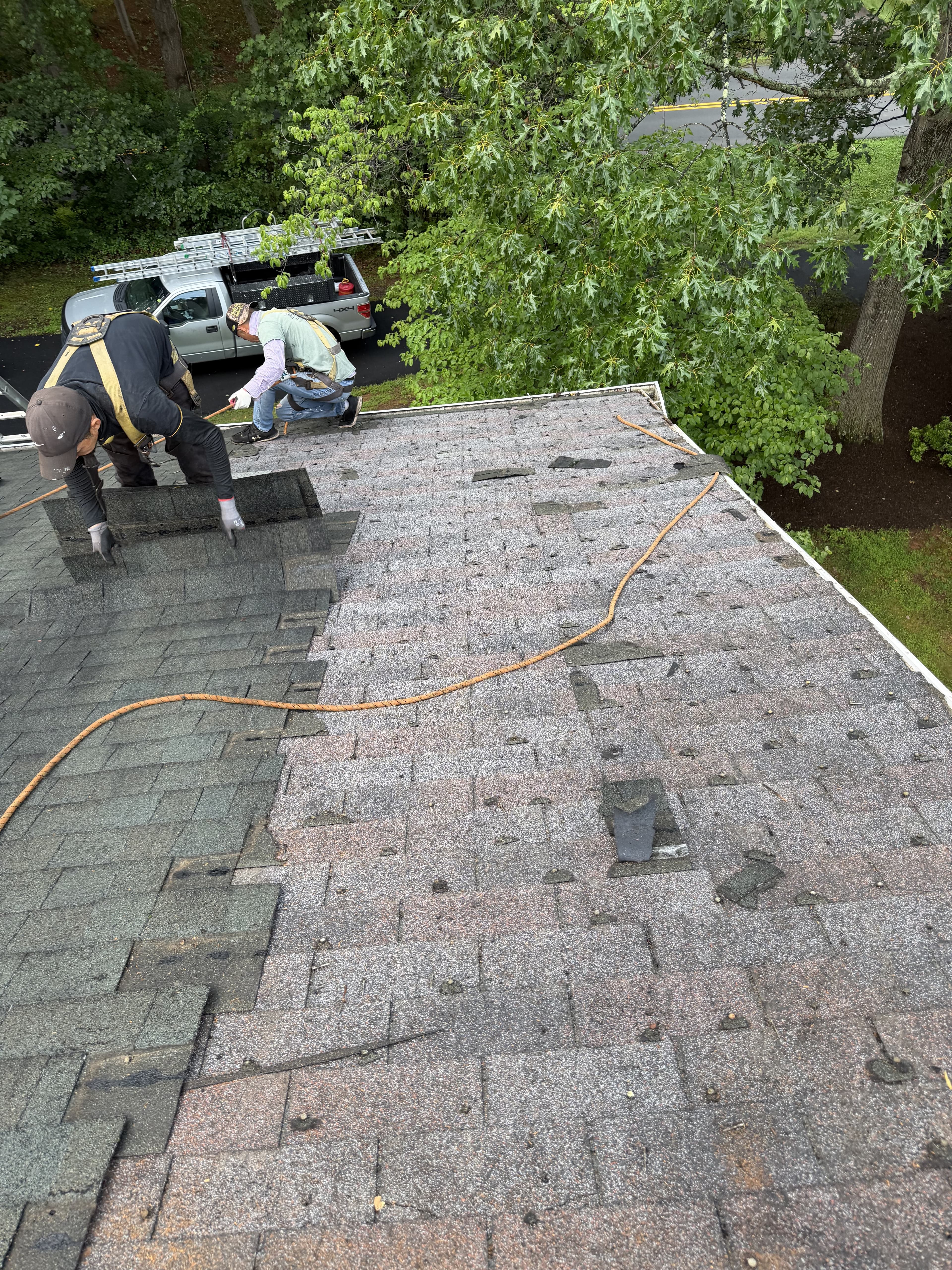
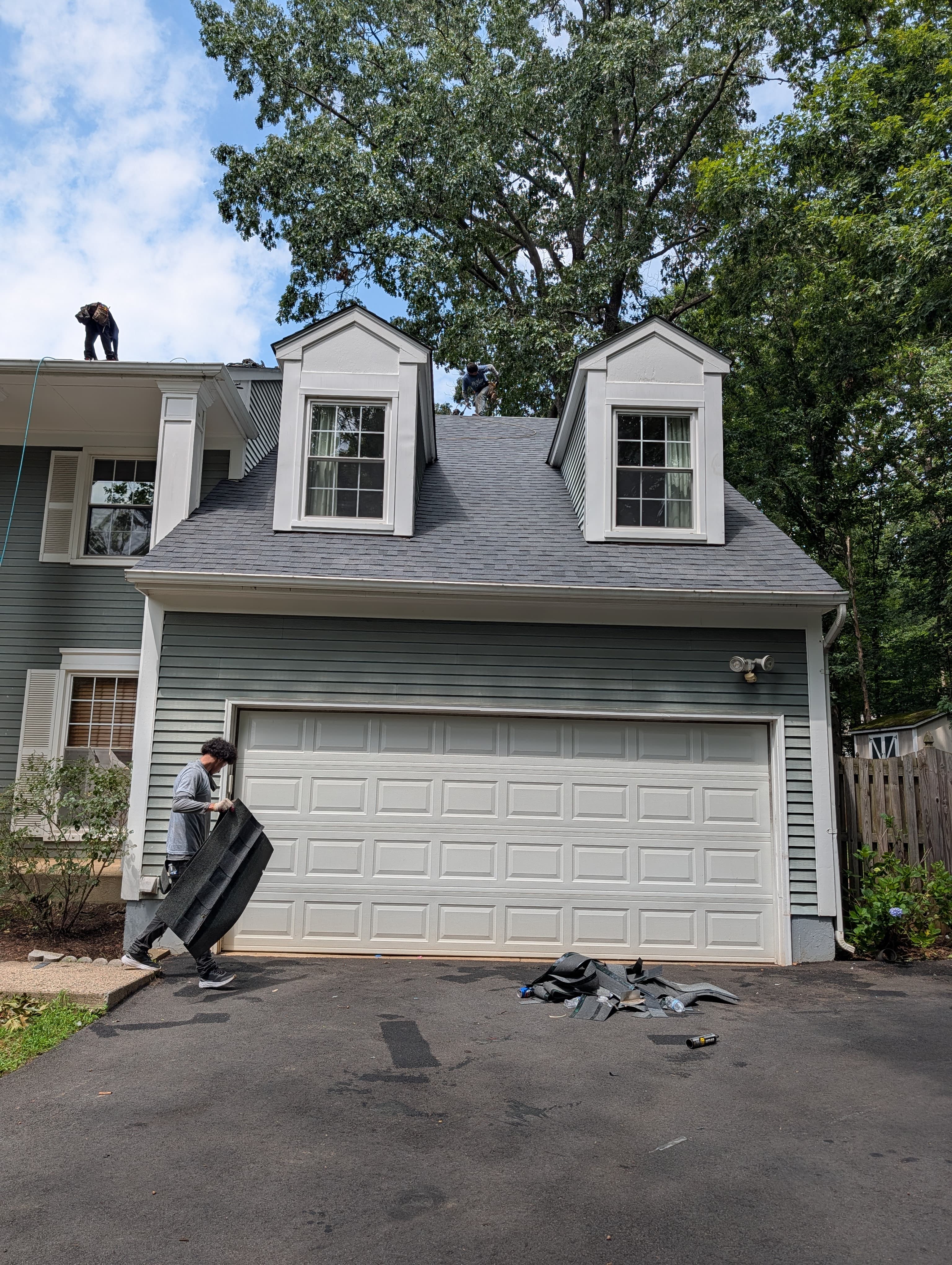
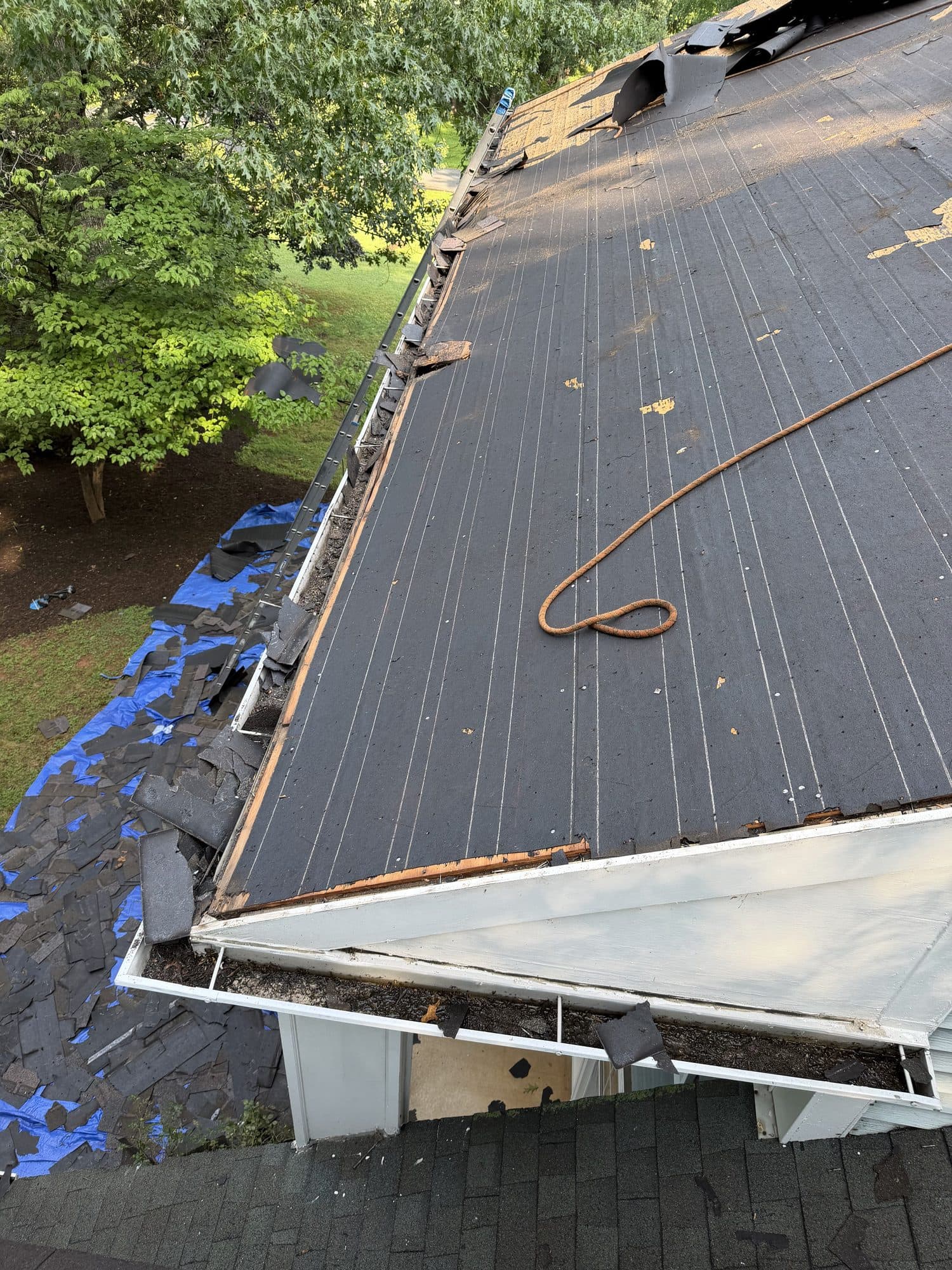
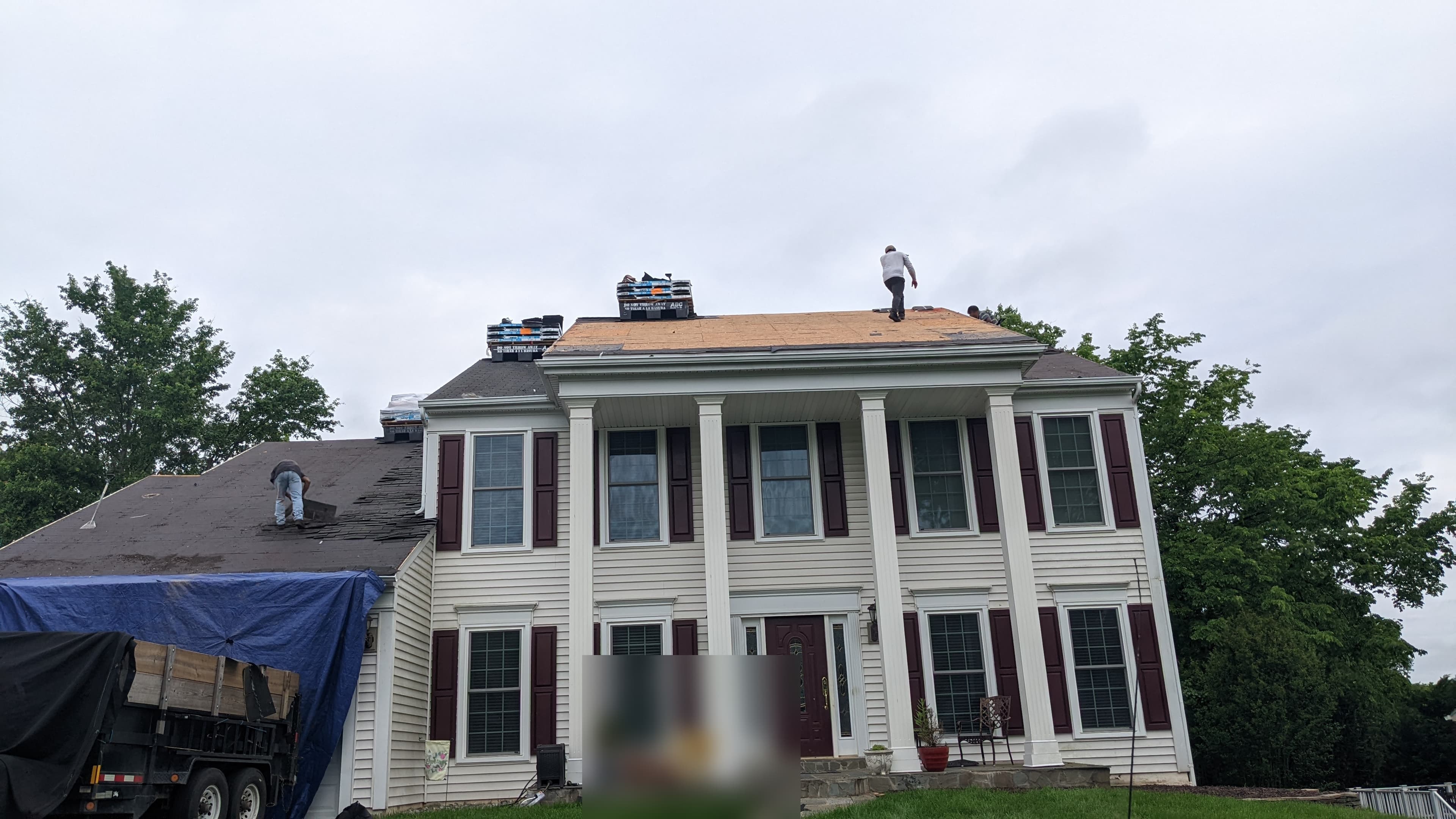
The first two photos show harnessed roofers removing and hauling old shingles on a project in Centreville. The third, from a Reston re-roof, shows what's left after tear-off: bare decking above, debris contained on a tarp below.
Removing the old roof
Shingles, old underlayment, nails and usually the old flashing and vent components come off down to the wood deck. If there are two layers of shingles, both come off, which takes more labor and creates more debris. That's why the number of layers is one of the first lines in a roofing estimate.
What the deck reveals
With the deck exposed, the crew can finally see soft spots, rot around old leaks, delaminated plywood, or gaps in older plank decking. Damaged boards get replaced before anything new goes on. This is where a written decking assumption matters. Your scope should say how much replacement decking is included and what happens beyond that: you see the damage, you approve the added cost, and the work continues.
There's a Fairfax County detail here. The county's permit guidance lists replacement of less than 256 square feet (nine boards) of roof plywood as not needing a permit, unless the roof must be fire rated, as on townhomes. If a Chantilly tear-off reveals more than that, the permit question changes, and the contractor should tell you.
Dry-in
Once the deck is sound, underlayment goes on. Depending on the scope, that can mean ice and water barrier membrane at eaves and valleys, synthetic underlayment across the rest of the deck, and drip edge. At that point the roof is dried in: protected from rain even though shingles aren't on yet. A crew shouldn't open more roof than it can dry in before weather arrives.
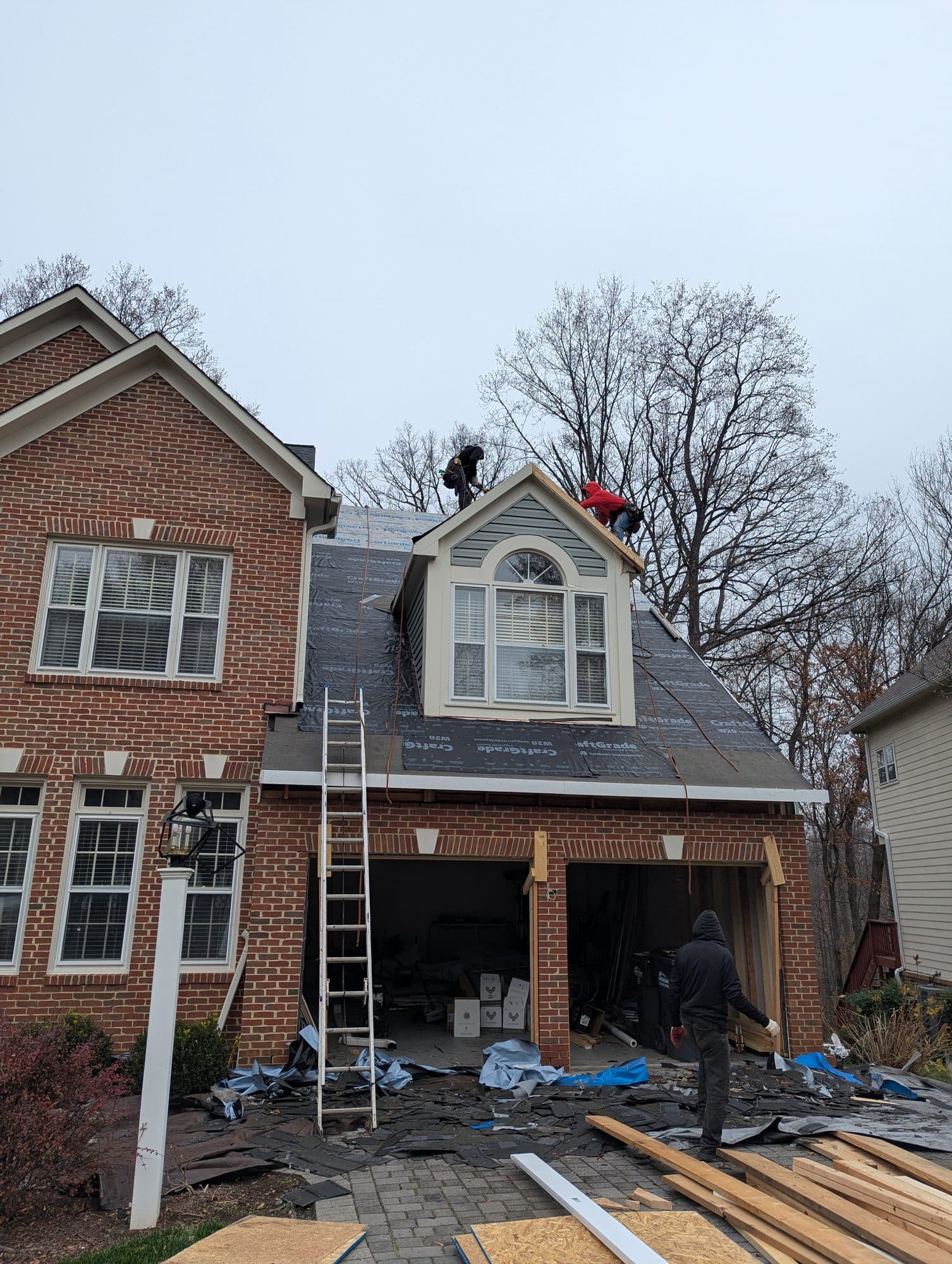
Synthetic underlayment going on a roof and dormer in Reston, and new decking ready for shingles on a replacement in Sterling.
Questions to ask the crew lead that morning
- Where will materials and debris be staged, and is anything blocking the driveway or garage?
- Which areas of the roof will be opened first, and what's the plan if rain moves in?
- Who should I call if I need to leave, or if something concerns me during the day?
- How will I be shown any damaged decking you find?
- What will the house look like at the end of the day: dried in, tarped, or shingled?
None of these are awkward questions. A crew that's organized will have ready answers, and the conversation sets expectations for everyone before the noise starts.
Cleanup
Roofing nails end up in grass and mulch no matter how careful the crew is. Daily cleanup should include picking up debris and sweeping for nails, especially around driveways, walkways and play areas. At final closeout, walk the yard yourself and ask for another pass anywhere you're unsure.
Do I need to be home during tear-off?▸
Not necessarily, but be reachable. If damaged decking beyond the scope is found, you'll be asked to approve it.
Is my house exposed to rain during tear-off?▸
Only briefly. A careful crew removes only as much roof as it can dry in with underlayment before weather arrives.
Will dust get into my house?▸
Some can fall into the attic through gaps in the decking. Cover anything stored up there.
Why might my estimate change after tear-off?▸
Hidden decking damage is the usual reason. The scope should explain how it's documented, priced and approved.