
Ventilation is the part of a roof most homeowners never see and most often pay for indirectly: a hot upstairs in July, frost on the underside of the decking in January, shingles that age faster on one slope than another, or ice building up at the eaves after a snow. None of those are fixed by better shingles alone. They're fixed by getting air into the attic low, out of it high, and making sure nothing is blocking the path.
What this work covers
- A ventilation review as part of every full roof replacement: what intake and exhaust exist, and what should change.
- Ridge vent installation where the roof shape suits it.
- Correcting ventilation problems found during roof repair, such as blocked or mismatched vents.
- Drip edge and the roof-to-gutter transition, so water lands in the gutter instead of behind it.
- Leaf Relief gutter guards, which Roofing Roughnecks installs.
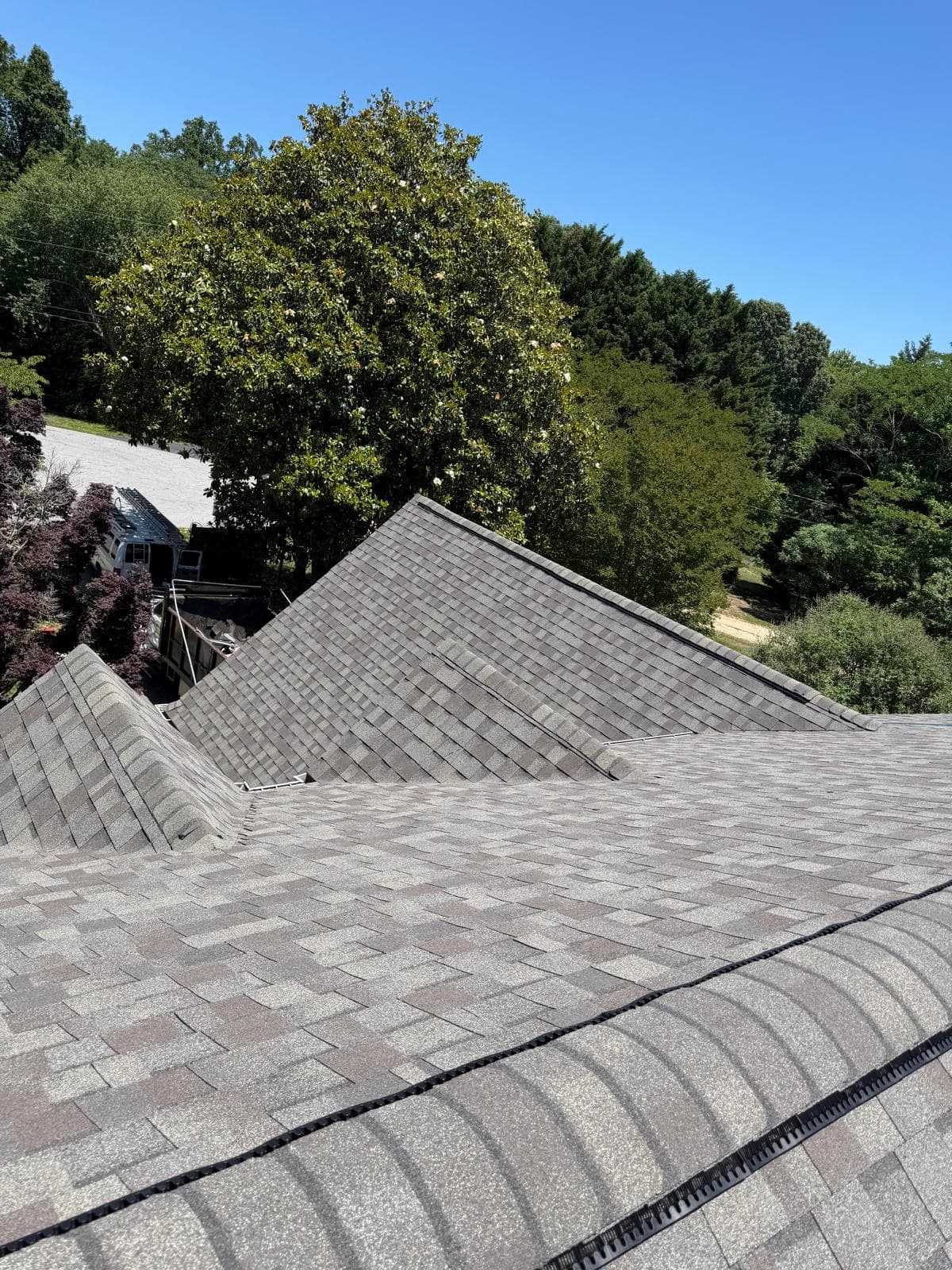
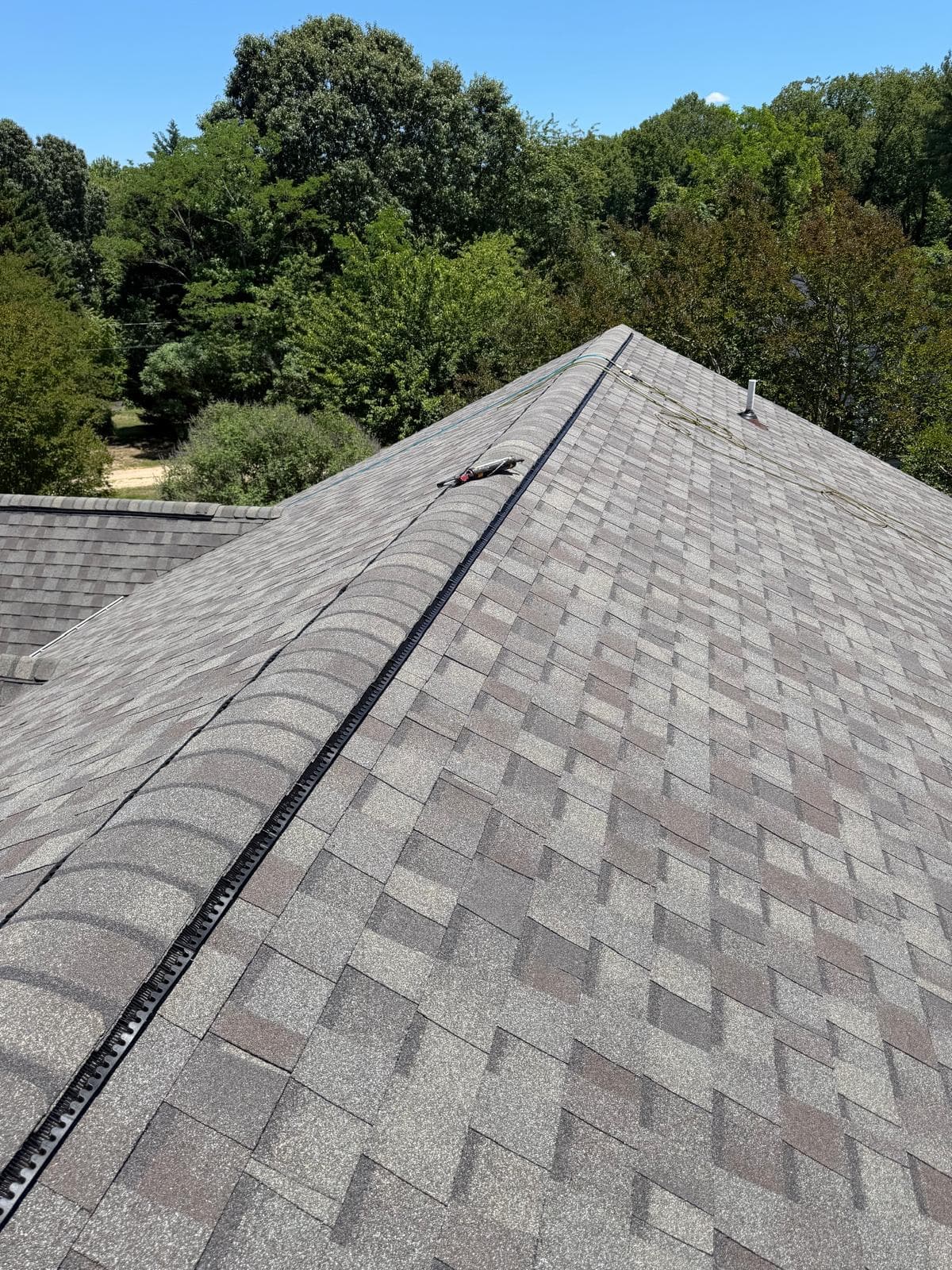
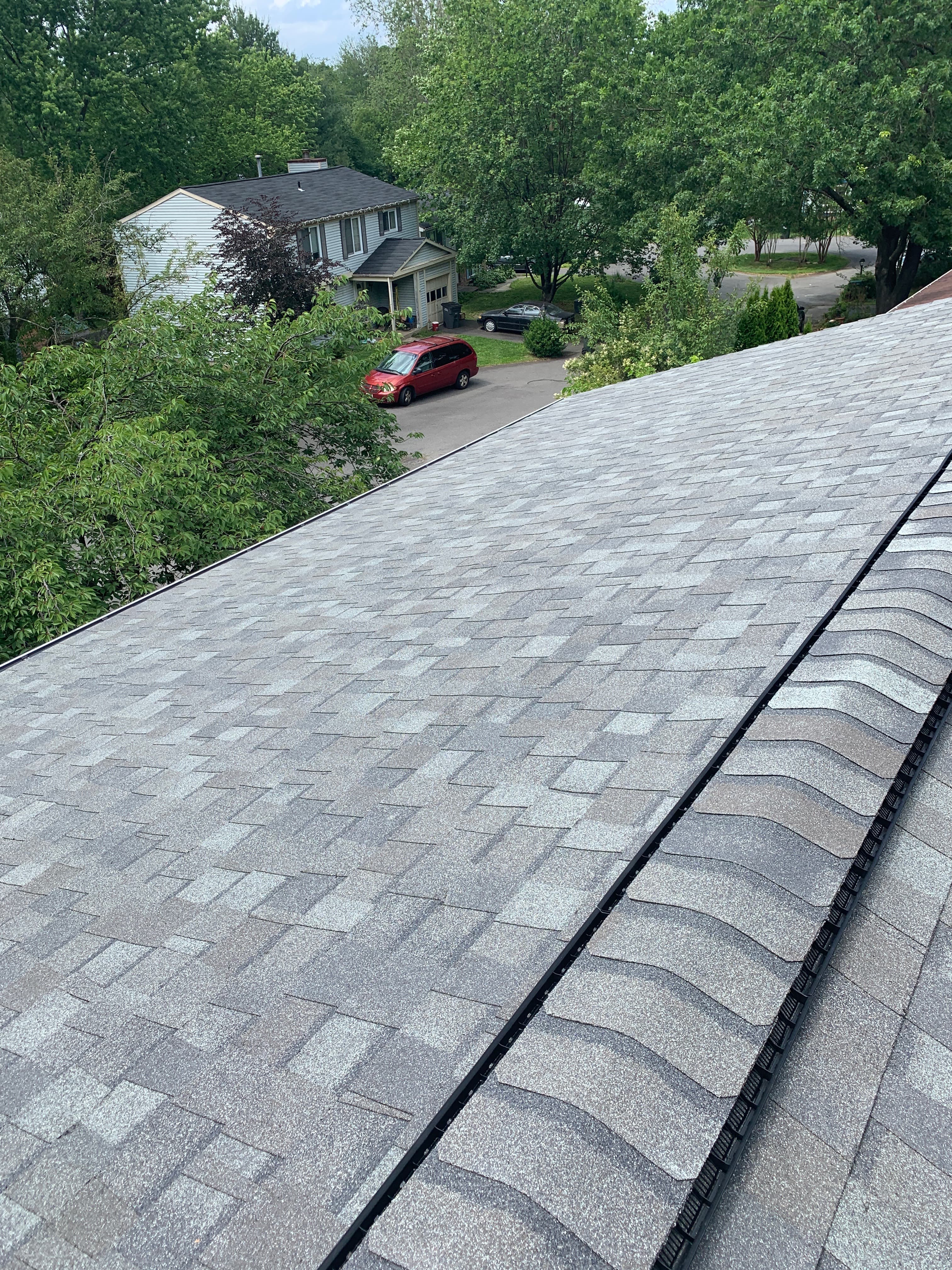
The first two photos show new ridge venting on a full roof replacement in Ashburn; the third is the finished ridge line on a replacement in Herndon. A ridge vent is the exhaust half of the system. It only works if the intake half, usually at the soffits, is open.
Intake and exhaust, in plain terms
Warm, moist air rises. A balanced attic lets cooler outside air in near the eaves and lets warm air out near the peak, so heat and moisture don't sit against the underside of the roof. Problems show up when one half is missing: ridge vents with painted-over or insulation-blocked soffits, or a mix of exhaust types that end up pulling air from each other rather than from the eaves. Part of a ventilation review is simply finding out what's really there.
Fans that vent into the attic
One of the simplest ventilation problems to fix is a bathroom or kitchen exhaust fan that dumps moist air into the attic instead of outside. That moisture ends up on the underside of the roof deck in cold weather. If we find one during an inspection or a tear-off, we'll point it out so it can be routed to an exterior vent.
What we won't promise
We won't promise a specific drop in your energy bill or a specific number of extra years of roof life from ventilation changes. Insulation, air leaks from the living space, ductwork in the attic and how a house is used all play a part. What we will do is document existing intake and exhaust, explain what we propose to change, and put it in the written scope.
Chantilly-specific notes
Fairfax County's permit guidance lists gutters among residential work that doesn't need a permit. HOA rules are a different matter: some communities care about gutter guard visibility or vent appearance on the street-facing slope, so check yours before choosing products. If you have solar panels, vent locations may need to be coordinated with the array.
Can you add a ridge vent without replacing the roof?▸
Sometimes, depending on the roof's condition and design. It's most straightforward during a replacement, when the ridge is open anyway. An inspection tells us which applies.
Do gutter guards come with a roof replacement?▸
Only if they're in the scope. Leaf Relief gutter guards are among the products Roofing Roughnecks installs; ask for them to be listed if you want them.
Will better ventilation stop ice dams?▸
It can help by keeping the roof deck colder, but ice dams also depend on attic insulation and air leaks from the house. Our ice dam guide covers the full picture.
What does ventilation work cost?▸
Ventilation correction is part of the roof repair category, which the cost guide lists at $500–$3,500 as a typical Northern Virginia range. On a replacement it's priced inside the overall scope.